Shopping West Steamboat can feel a little confusing at first because it is not just one neighborhood. It is a corridor with several distinct pockets, each offering a different mix of home styles, lot sizes, and daily conveniences. If you want to understand how the west side fits your budget, lifestyle, and long-term goals, this guide will help you sort through the options with more clarity. Let’s dive in.
Why West Steamboat Stands Out
West Steamboat is best understood as a stretch of neighborhoods and subdivisions west of downtown Steamboat Springs, generally along U.S. 40. Routt County identifies the West End Subdivisions as about 5 miles west of downtown, and local planning data shows this corridor is a major focus for future growth.
That matters when you are home shopping. You are not just comparing one subdivision to another. You are also looking at an area that already functions as an established residential zone, while continuing to add newer housing choices and connectivity improvements.
County assessor materials describe the west side as a distinct market because it has water and sewer infrastructure, mostly smaller lots, and a housing pattern that feels more like a suburban neighborhood than undeveloped county land. The area includes mostly single-family homes, limited vacant lots, and a range of properties from more modest entry-level homes to higher-quality custom homes.
How the West Side Feels by Area
The easiest way to shop West Steamboat is to break it into two broad categories. First, there are the closer-in west pockets with more compact lots and attached housing. Second, there are the more established west-end subdivisions with larger lots, more open space, or a more traditional subdivision layout.
This is where local knowledge really helps. Two homes may both be in “West Steamboat,” but the day-to-day feel can be very different depending on whether you want a townhome near newer development, a classic subdivision setting, or more trail and open-space access.
Closer-In West Pockets
West End Village and Nearby Areas
West End Village, Riverside, and Miller-Frasier are part of what county appraisal materials describe as a Steamboat vicinity pocket. This area still has some vacant land and has seen some older duplexes converted into condominiums or townhomes.
For buyers watching price point and housing type, this area is especially important because county materials note that it remains one of the last parts of the Steamboat area with entry-level housing. That does not mean every property will be affordable by every buyer’s definition, but it does mean this pocket often belongs on the shortlist if you want to maximize options.
West End Village is one of the clearest examples of compact west-side housing. County records show deed-restricted townhomes built there between 2003 and 2008, with unit sizes ranging from 1,290 to 1,533 square feet, and lot sizes around 0.13 acre.
Basecamp and Newer Townhome Product
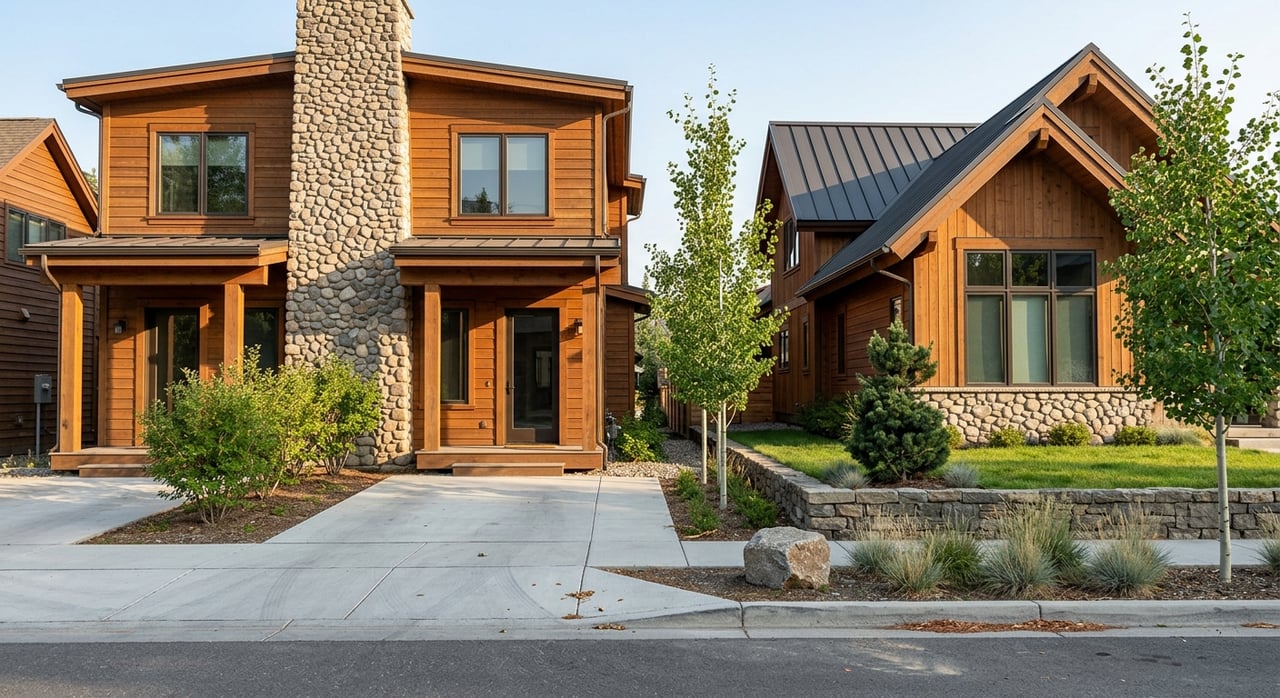
If you are looking for newer attached housing on the west side, Basecamp is worth noting. City planning records document a 2025 final plat for seven Basecamp Row townhomes, making it a clear example of the corridor’s newer, denser housing product.
This part of the west corridor may appeal to buyers who want lower-maintenance living, newer construction, or a more compact footprint. It also reflects a larger trend in West Steamboat, where housing choices are expanding beyond older single-family layouts.
Established West-End Subdivisions
Steamboat II
Steamboat II is the oldest and most traditional of the core west-end subdivisions. Routt County says it was established in the early 1970s and includes 204 lots across 108 acres.
The average lot size is about 0.34 acre, which gives many homes a more classic subdivision feel than the denser pockets closer in. The subdivision is fully served by municipal utilities and includes paved and lighted roads, parks, and a limited trail system.
If you picture a straightforward neighborhood layout with established homes and more yard space than an attached product typically offers, Steamboat II is often the west-side benchmark. For many buyers, it represents the most familiar suburban-style option in the corridor.
Heritage Park
Heritage Park offers more variety in both lot size and housing setup. County records say it was platted in 1997 and includes 81 lots ranging from 0.048-acre townhome lots up to 2.2-acre lots.
That range creates a broader mix than you see in some other west-side subdivisions. The neighborhood also includes platted duplex lots that are now built as townhomes under current county code.
Heritage Park sits next to the Yampa River and the Steamboat Golf Course, and county records note that 11 lots face either the river or the course. If you are comparing neighborhoods based on setting as much as floor plan, this is one of the more distinct west-side options.
Silver Spur
Silverview Estates, commonly known as Silver Spur, stands out for its open-space character. County materials say the subdivision includes 129 lots ranging from 0.29 to 0.53 acre, with nearly all lots under 0.5 acre.
What makes Silver Spur different is the amount of shared open space. The county identifies seven open-space parcels totaling just over 48.43 acres, along with a park, playground, and an extensive trail system.
Access is about 0.40 mile north of U.S. 40, which can make it feel a little set apart from the main corridor while still being closely tied to west-side living. For buyers who value trails and a more open neighborhood layout, Silver Spur often checks boxes that other subdivisions do not.
Comparing West Steamboat Options
If you want a quick framework, here is a simple way to think about the main west-side choices:
| Area | General Housing Pattern | Notable Features |
|---|---|---|
| West End Village and nearby pockets | Compact lots, attached housing, some entry-level options | Townhomes, condo conversions, closer-in west location |
| Basecamp area | Newer denser housing | Newer townhome product |
| Steamboat II | Traditional subdivision layout | Average 0.34-acre lots, utilities, parks, paved roads |
| Heritage Park | Mixed lot sizes and housing types | River and golf course adjacency, townhomes to larger lots |
| Silver Spur | Single-family focus with open-space feel | Trails, park, playground, 48.43+ acres of open space |
Each of these areas serves a different type of buyer. The right fit often comes down to how you weigh yard space, home type, neighborhood layout, and access to outdoor amenities.
Transit, Trails, and Daily Convenience
West Steamboat is not only about the homes themselves. It is also one of the few parts of the area where transit and trail planning play a meaningful role in daily life.
The city’s free summer Main Line bus links west Steamboat, downtown, and the mountain on a 15-minute continuous loop. During heavier summer periods, the west-end bus can transfer at Stockbridge Transit Center.
For buyers who want to rely less on driving for every trip, that is worth paying attention to. Even if you still plan to drive most days, transit access can add convenience and flexibility.
Trail connectivity is also improving. The city’s parks master plan calls for extending the Core Trail west toward Steamboat II, and a 2026 city notice says the West Steamboat Trail will run 3,050 linear feet from west of Snow Bowl Plaza, past the KOA, and under U.S. 40 to improve neighborhood-to-neighborhood connectivity.
That kind of infrastructure can shape how an area feels over time. It does not just affect recreation. It can also improve how easily you move between neighborhoods and nearby services.
A Key West-Side Community Anchor
Sleeping Giant School is an important west-side reference point for many buyers. The school identifies itself as a K-8 school at 40250 Giant View Drive, and the Colorado Department of Education profile describes it as serving the west side of Steamboat Springs.
For home shoppers, this is less about ranking one area over another and more about understanding the basic geography of the west corridor. Community anchors like this often help define how buyers orient themselves when narrowing down a search.
Why Buyers Keep Watching West Steamboat
West Steamboat is not just established housing stock. It is also one of the most visible growth areas in the local planning conversation.
In the city’s 2024 community survey, 67% of respondents selected West Steamboat along Highway 40 as far as Steamboat II as one of their top choices for future development. That was the highest-supported growth area in the survey.
For you as a buyer, that may signal a few things. It suggests the west corridor is likely to remain active in terms of housing, infrastructure, and neighborhood evolution. It also means the west side is a place where understanding micro-locations matters, because the area may keep changing over time.
How to Choose the Right West-Side Fit
When buyers compare West Steamboat neighborhoods, the most useful questions are usually practical ones:
- Do you want attached housing or a detached single-family home?
- Would you prefer a compact lot or more yard space?
- Is open space and trail access a top priority?
- Do you want a more traditional subdivision feel?
- Would a setting near the river or golf course matter to you?
- Is newer construction high on your list?
West End Village and the nearby closer-in pockets often attract buyers focused on compact housing and entry-level opportunities. Steamboat II tends to appeal to buyers who want a classic subdivision layout. Heritage Park offers more variety in lot size and setting, while Silver Spur stands out for open space and trails.
The smartest way to shop this part of the market is to compare neighborhoods at the micro level, not just by broad west-side labels. In a corridor like this, subtle differences in lot pattern, housing type, and location can make a big difference in your daily experience and long-term fit.
If you want help sorting through West Steamboat with a more precise, neighborhood-by-neighborhood lens, Mitch Shannon offers the kind of local, appraisal-informed guidance that can help you compare options with confidence.
FAQs
What is considered West Steamboat for home buyers?
- West Steamboat is best viewed as a corridor west of downtown Steamboat Springs along U.S. 40, including closer-in west pockets and subdivisions such as Steamboat II, Heritage Park, and Silver Spur.
Which West Steamboat neighborhoods have more entry-level housing?
- County appraisal materials identify West End Village, Riverside, and Miller-Frasier as part of an area that remains one of the last parts of the Steamboat area with entry-level housing.
What is Steamboat II like for West Steamboat buyers?
- Steamboat II is a traditional west-end subdivision established in the early 1970s with 204 lots, an average lot size of about 0.34 acre, municipal utilities, paved and lighted roads, parks, and a limited trail system.
What makes Heritage Park different in West Steamboat?
- Heritage Park offers a wider range of lot sizes and housing types than many west-side areas, and it sits next to the Yampa River and Steamboat Golf Course.
Why do buyers look at Silver Spur in West Steamboat?
- Silver Spur is known for its open-space character, with seven open-space parcels totaling just over 48.43 acres, plus a park, playground, and extensive trail system.
Does West Steamboat have bus service and trail access?
- Yes. The city’s free summer Main Line connects west Steamboat with downtown and the mountain, and the city is also advancing west-side trail improvements including the West Steamboat Trail.
Is West Steamboat expected to keep growing?
- City survey data from 2024 showed strong support for future development along the West Steamboat corridor, suggesting it will remain an important area for growth and housing activity.